Technology
🔋Valeo-VoltR : Giving Shared Micromobility Batteries a Second Life
3 March, 2026
The number of shared electric bikes and scooters continues to grow, reaching approximately 530,000 in Europe and 204,000 in North America in 2025. Considering that the majority operate on a battery-swap model — with a ratio of 1.5 batteries per vehicle — that adds up to over one million batteries in circulation.
In both regions, environmental constraints are materializing through regulation (European and national laws) as well as at the local level, with operating license criteria increasingly focused on battery management.
In this growing sector, a concrete, turnkey solution for responsible battery management is urgently needed. Two French companies have decided to combine their expertise to offer a comprehensive service that optimizes battery lifespan and manages end-of-life batteries.
The End-of-Life Battery Challenge
Lithium-ion batteries face harsh conditions in micromobility fleets: frequent charge cycles, repeated handling and plug-ins, and non-optimal charge management driven by fleet operational constraints. This leads to premature aging — both at the electronics and cell levels.
Without going into full detail here, the environmental impact of battery production is enormous — all the more so when scaled to one million units.
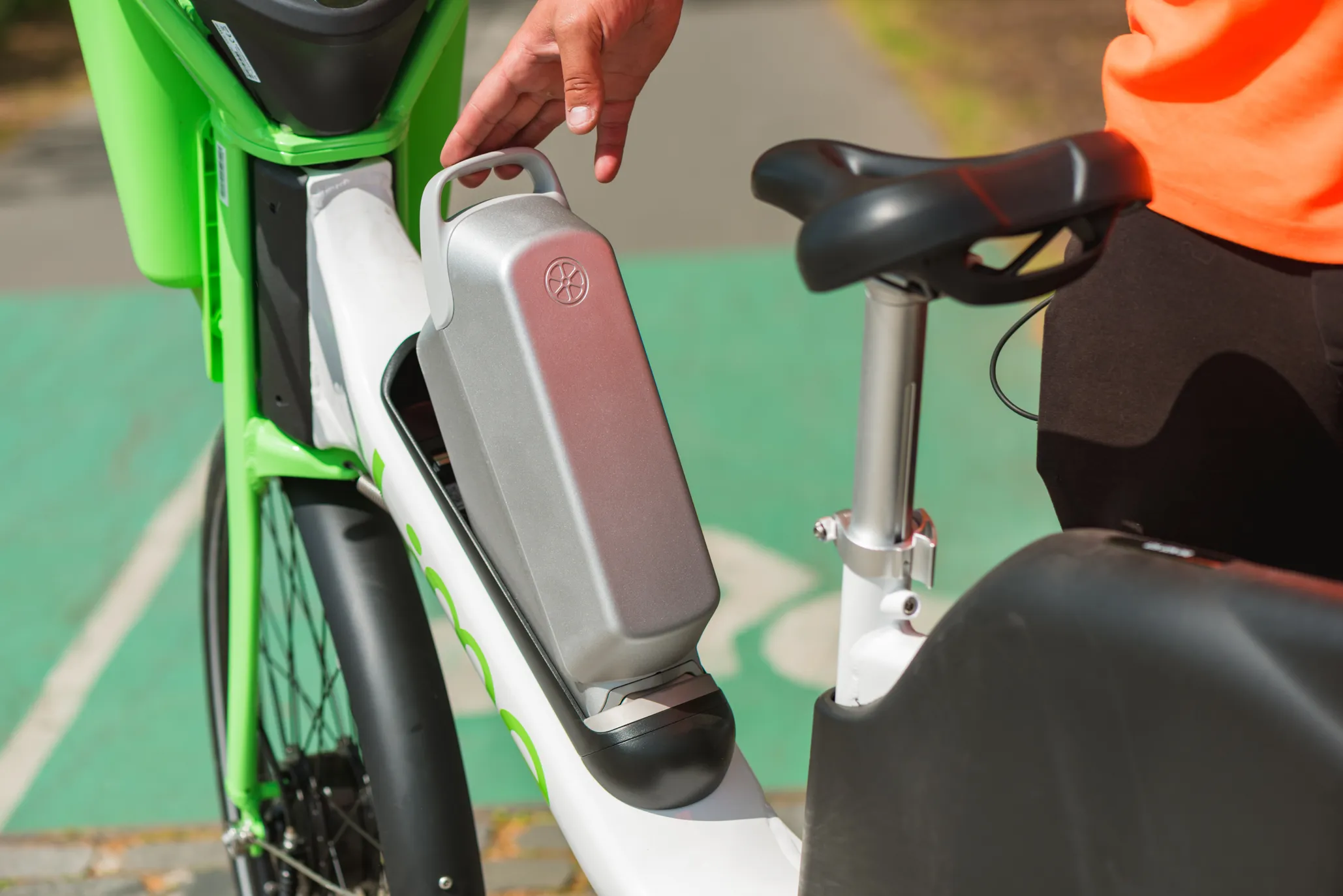
National and European governments have acknowledged this shift in electric mobility. In 2023, the European Union adopted Regulation 2023/1542, setting multiple targets:
▶ 51% collection rate by 2028
▶ 51% recycling and recovery of lithium by 2027, and 90% of cobalt and nickel by 2024
▶ Carbon footprint and lifecycle declarations
Most notably, this regulation introduces a digital battery passport: from 2027, every electric vehicle battery must carry a QR code providing access to its composition, origin, state of health, and repair history.
The 2R Offering: Repair, Remanufacturing
Two French companies have joined forces to comprehensively address the environmental, operational, and legal constraints bearing on battery fleets:
▶ VoltR, a startup founded in 2022, specializes in energy pack remanufacturing through unique expertise in Li-Ion cell analysis.
▶ Valeo, an automotive supplier founded in 1923, is a specialist in electronic aftersales through its subsidiary Valeo Service.
Since late 2025, they have offered a unique service to electric light vehicle fleet operators through their 2R offering:
▶ Repair. For recent batteries with a good state of health (SOH), electronic components are checked and repaired or replaced, the BMS is reset, and cells are rebalanced. A deep-discharge recovery process is applied where needed.
▶ Remanufacturing. For end-of-life batteries with a low SOH, the energy pack (cells) is replaced entirely.
Thanks to this tailored, per-battery treatment, lifespan is maximized — with a target repair rate of over 95% for an entire battery fleet.

Valeo handles the repair stages, applying its electronics expertise to diagnose and resolve identified faults using industrial-grade quality processes.
VoltR manages energy pack replacement: through a proprietary algorithm — trained on a large dataset and enriched with each cell analyzed — the company selects second-life cells and combines them to guarantee a minimum SOH of 85% (or higher, depending on the contract).
These are key elements for preserving certifications under European law. The era of repairs by uncertified small operators is over.
Real Benefits for Operators
This all-in-one service delivers multiple advantages for shared mobility operators. The most obvious is a reduced carbon footprint linked to batteries. The average 95% recirculation rate via the 2R process cuts CO₂-equivalent emissions by 86%, according to VoltR’s calculations.
Systematic, optimized fleet battery repair also drastically reduces operating costs. Valeo and VoltR’s expertise enables component-by-component battery diagnosis, extracting maximum value from each part’s lifespan — a second-level application of the lifecycle optimization already widely adopted by micromobility operators for bikes and scooters.
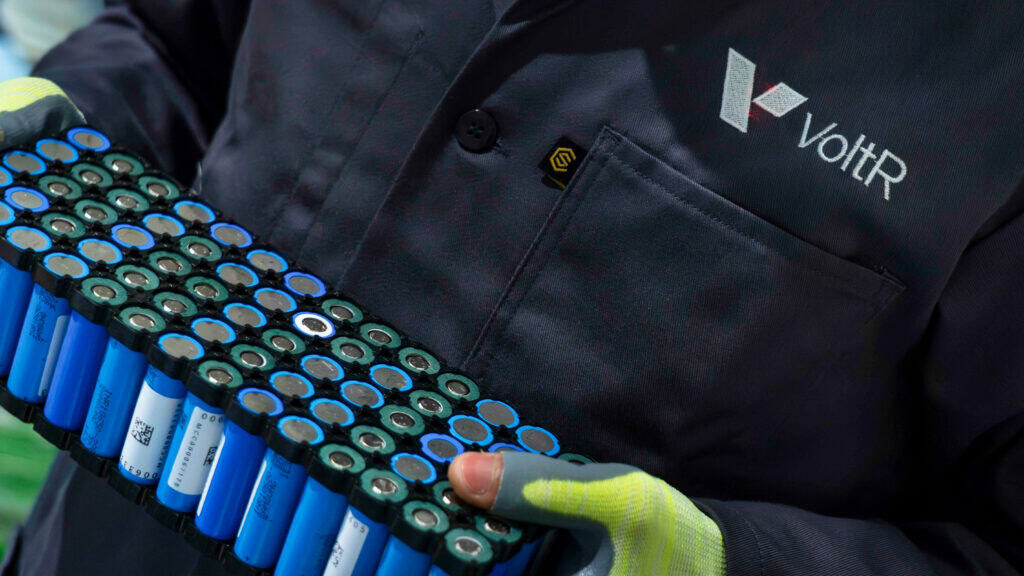
Finally, the 2R solution offers a head start on European regulatory compliance: not only does it lower environmental impact, but repairs, refurbishment, and remanufacturing are carried out under quality-controlled processes, allowing battery certifications to be preserved in the vast majority of cases.
While VoltR has been collaborating for several years with major shared micromobility names — such as Lime and Pony — on battery pack reuse and remanufacturing, the 2R offering launched in late 2025 is still in its early rollout phase. Several contracts (still confidential) have already been signed with public and private service operators, with announcements expected soon.
The Valeo-VoltR partnership marks an important milestone in structuring the micromobility battery management ecosystem in Europe. By combining industrial expertise with technological innovation, the 2R offering simultaneously addresses the environmental, economic, and regulatory challenges facing shared fleet operators.
With over one million batteries already in circulation and increasingly stringent European recycling targets, circular economy solutions like the one proposed by Valeo-VoltR are poised to become the norm rather than the exception. The success of this approach will depend on its ability to convince operators that the circular economy is not merely a regulatory constraint, but a genuine lever for competitiveness and sustainability in the shared micromobility sector.